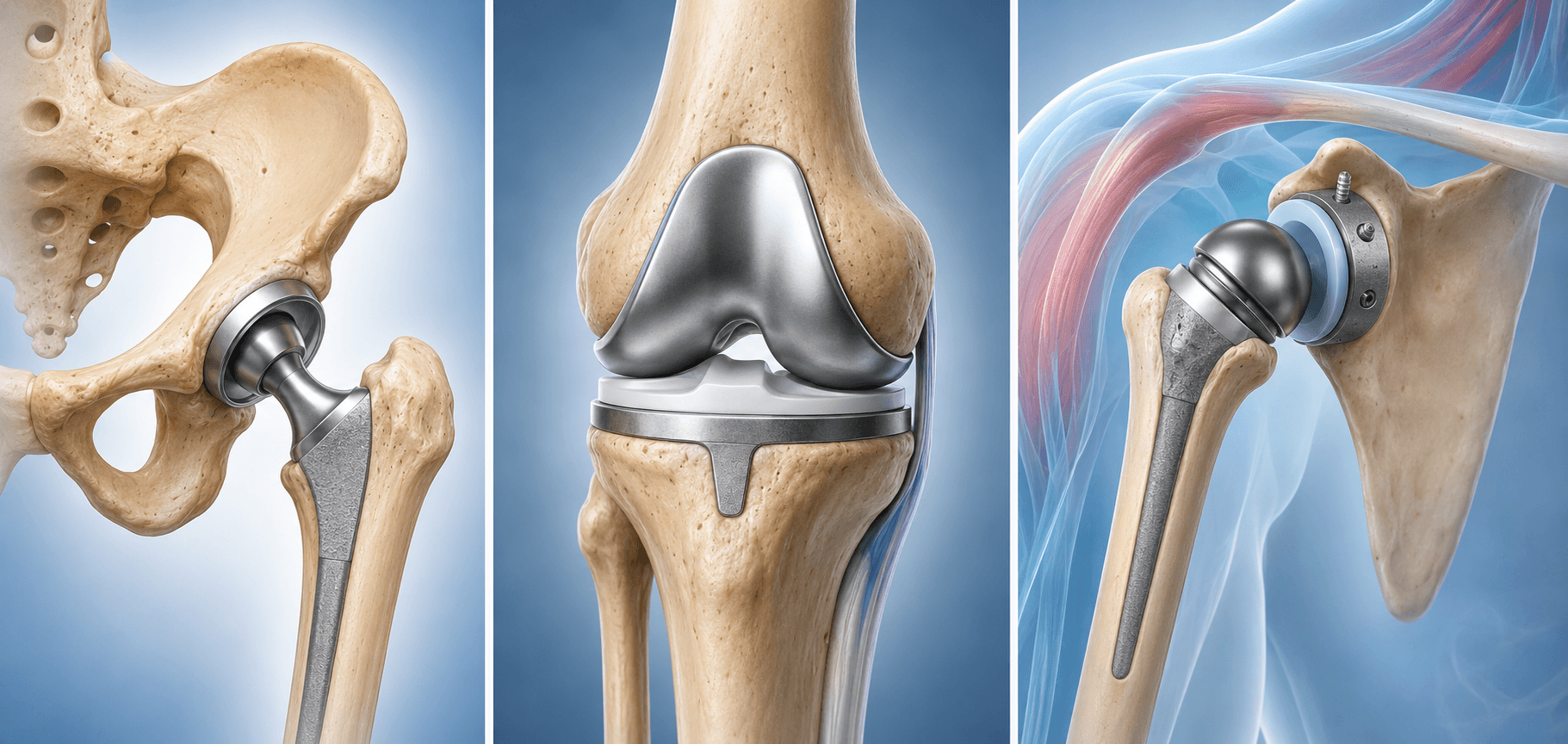
What Is Total Knee Replacement?
Total knee replacement (TKR), also known as total knee arthroplasty, is a surgical procedure where damaged bone and cartilage from the knee joint is resurfaced with artificial implants. The artificial joint closely mimics the natural knee, restoring pain-free movement. It is one of the most successful procedures in all of orthopedic surgery, with over 90% of patients experiencing significant pain relief.
Are You a Candidate?
Ideal candidates include patients with severe knee pain limiting daily activities, significant stiffness, and pain that persists even at rest. Candidacy is assessed based on degree of arthritis on X-ray, body weight, age, and response to conservative treatments like physiotherapy, weight management, and joint injections. Most candidates are over 50, though younger patients with severe arthritis may also qualify.
The Procedure Explained
The surgery typically lasts 1–2 hours under spinal or general anesthesia. Damaged cartilage and bone are removed and replaced with metal and plastic components. Modern robotic-arm guided systems allow millimetre-level precision in implant positioning. The procedure involves careful balancing of ligaments and soft tissues to ensure stability and natural knee kinematics post-operatively.
Recovery Timeline
Most patients begin walking within 24 hours of surgery. Hospital stays are typically 2–3 days. A structured physiotherapy program begins immediately post-surgery and continues for 6–12 weeks. Swelling and discomfort are normal for several months. By 6 months, most patients walk freely, climb stairs, and return to an active lifestyle. Full implant longevity typically exceeds 20 years with modern implants.
Risks & Complications
As with any major surgery, risks include infection, blood clots, implant wear, stiffness, and rarely nerve damage. Modern prophylactic antibiotics, anticoagulation protocols, and early mobilization significantly minimize these risks. The rate of serious complications is under 2% in high-volume centres. Choosing an experienced surgeon is the most important risk mitigation strategy.