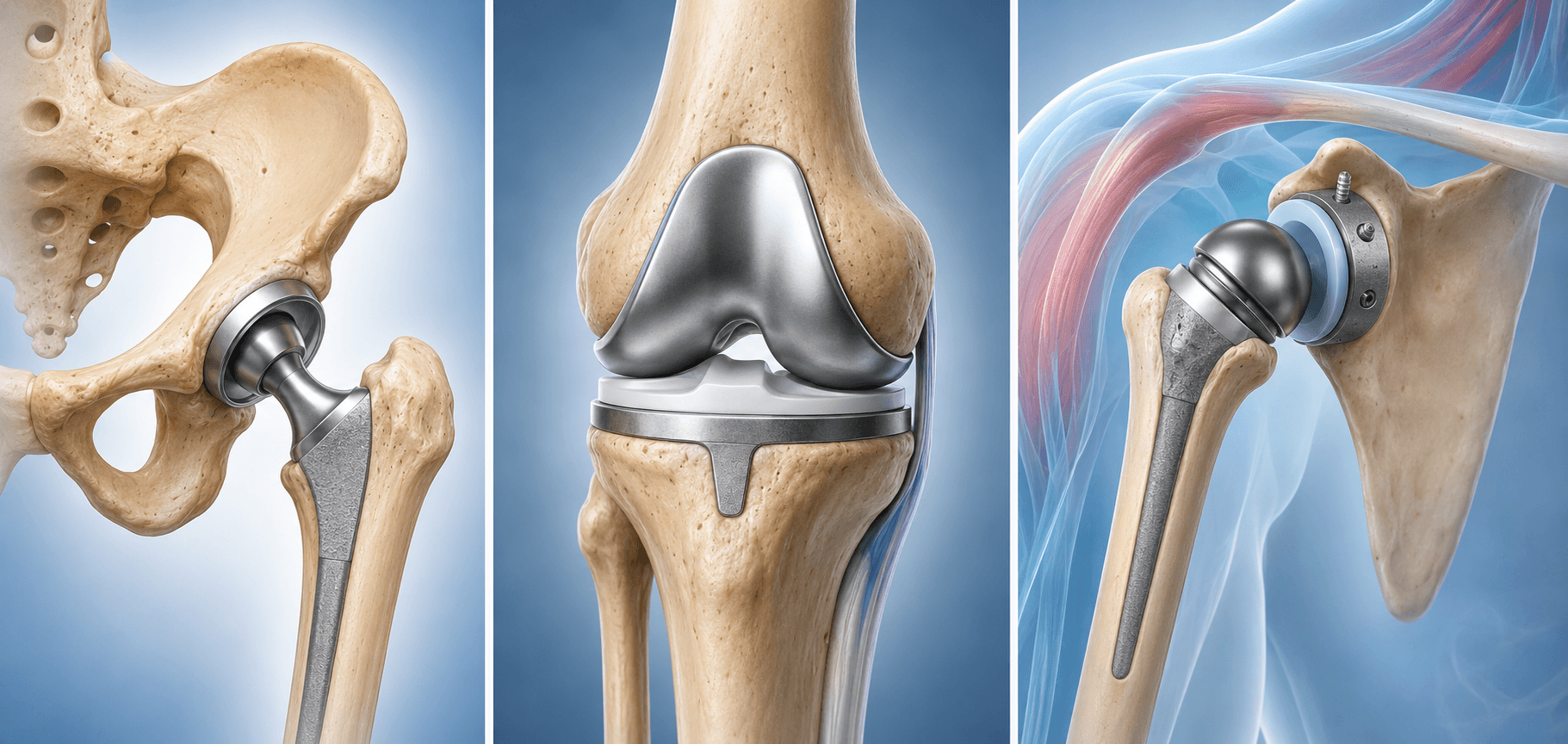
When Does the Hip Need Replacement?
The hip is a ball-and-socket joint — one of the largest in the body. When severe arthritis, avascular necrosis, or injury damages the cartilage lining, it causes debilitating pain and reduced mobility. When conservative treatments no longer provide relief, total hip replacement (THR) is a highly effective and durable solution with outcomes lasting over 20 years in most patients.
Surgical Approaches
The traditional posterior approach was historically most common, offering excellent visualization. The anterior (front) approach has gained significant popularity due to faster recovery and fewer post-operative restrictions. The direct lateral approach is preferred by some surgeons for specific hip conditions. Approach choice depends on patient anatomy, surgeon training, and implant type — all yield excellent outcomes in experienced hands.
Implant Options & Bearing Surfaces
Modern hip implants include ceramic-on-ceramic bearings (extremely low wear, ideal for young active patients), metal-on-highly-crosslinked-polyethylene (gold standard for most patients), and ceramic-on-polyethylene. Cementless (press-fit) fixation is standard for patients under 70. Dual-mobility cups are increasingly used to reduce dislocation risk in high-risk patients.
Recovery & Rehabilitation
Most patients are walking the day after surgery. Anterior approach patients often have fewer post-operative restrictions and faster recovery. Full recovery typically takes 3–6 months. Return to driving is usually possible at 4–6 weeks. Return to low-impact sports (golf, swimming, cycling) occurs at 3–6 months. High-impact activities should be discussed with your surgeon based on implant type and individual factors.