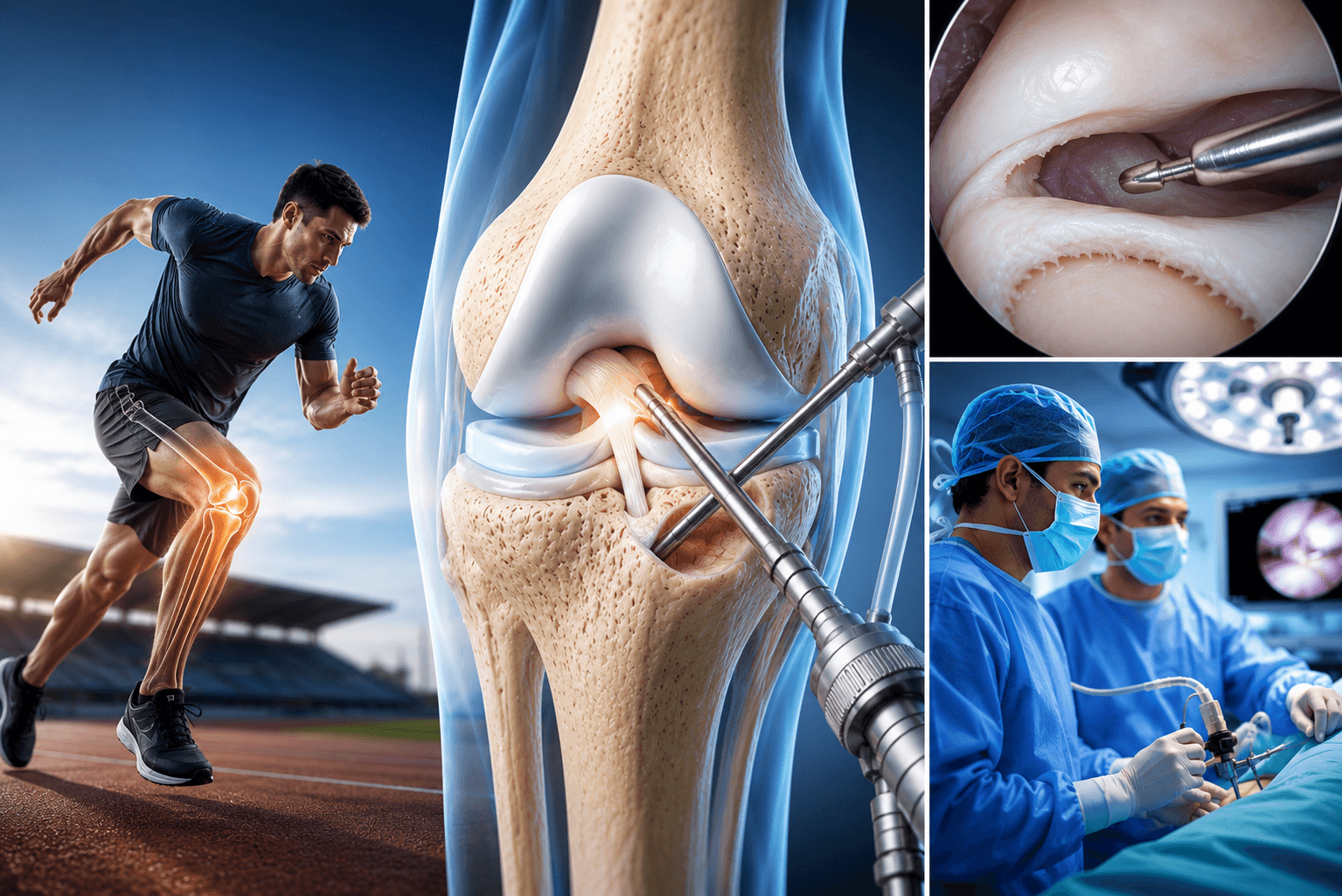
What Is the ACL?
The anterior cruciate ligament (ACL) is one of the key ligaments that stabilizes the knee joint. It connects the thighbone (femur) to the shinbone (tibia) and runs diagonally through the middle of the knee. The ACL prevents the tibia from sliding in front of the femur and provides rotational stability. ACL tears are among the most devastating sports injuries and require months of rehabilitation.
Risk Factors for ACL Injury
ACL injuries occur more frequently in sports involving sudden stops, direction changes, jumping, and pivoting — including football, basketball, and badminton. Female athletes have a 2–8 times higher risk due to anatomical, hormonal, and biomechanical factors. Previous ACL injury, muscle imbalance (quadricep-hamstring ratio), and inadequate warm-up routines also significantly increase risk.
Evidence-Based Prevention Programs
The FIFA 11+ warm-up program and the ACL Play It Safe program are two well-validated neuromuscular training protocols. They focus on strengthening exercises, plyometrics, balance and agility training, and technique correction. Studies consistently show these programs reduce ACL injury rates by up to 50% in high-risk populations when implemented correctly before every training session.
Proper Warm-Up Protocols
A sport-specific warm-up lasting 15–20 minutes activates the neuromuscular system and prepares joints for explosive movements. Include dynamic stretching (leg swings, hip circles), progressive jogging, cutting drills at increasing intensity, and single-leg balance exercises. Avoid static stretching before activity as it can temporarily reduce muscle power output.
Return to Sport After ACL Reconstruction
Following ACL reconstruction, structured rehabilitation typically spans 9–12 months before return to competitive sport. Criteria-based return (rather than time-based) is the current gold standard, assessing strength symmetry (limb symmetry index >90%), functional test performance, and psychological readiness. Premature return significantly increases the risk of re-rupture.