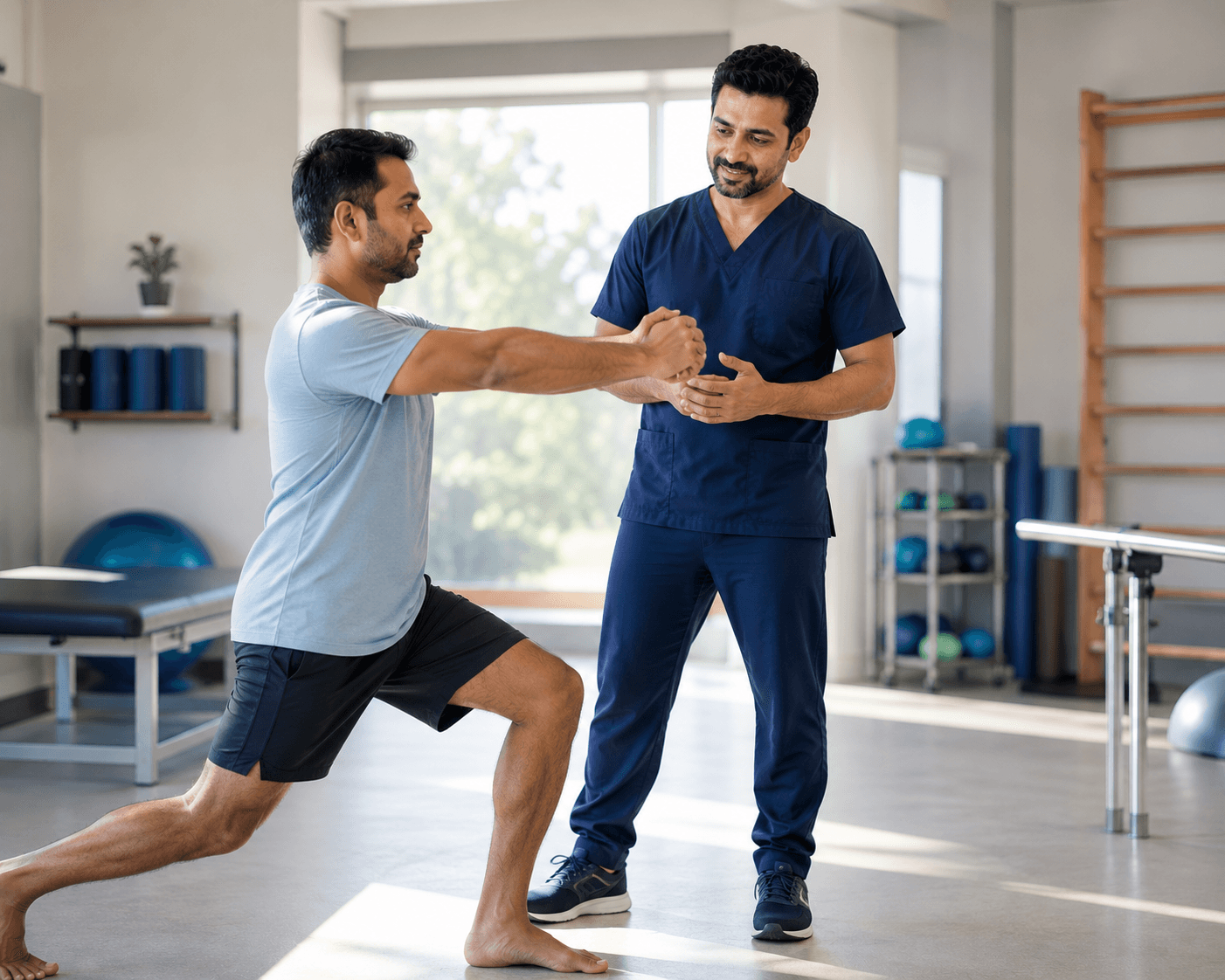
Why Physiotherapy Is Non-Negotiable
Post-operative physiotherapy is not optional — it is as important as the surgery itself. Without proper rehabilitation, even a technically perfect operation can result in stiffness, muscle weakness, and incomplete functional recovery. Physiotherapy systematically restores strength, range of motion, proprioception, and confidence, ultimately determining the real-world outcome of your surgery.
The Case for Early Mobilization
Research consistently shows that mobilizing within 24 hours post-surgery reduces complication rates, prevents deep vein thrombosis, accelerates recovery, and improves long-term outcomes. Early mobilization is a cornerstone of Enhanced Recovery After Surgery (ERAS) protocols now used in leading orthopedic centres globally. Patients who walk early are discharged sooner and recover faster.
Typical Rehabilitation Stages
Phase 1 (0–6 weeks): Focus on pain management, gentle range of motion, and protected weight-bearing. Phase 2 (6–12 weeks): Progressive strengthening, full weight-bearing, balance and coordination work. Phase 3 (3–6 months): Functional training, sport-specific exercises, and return to activity milestones. Timeline varies by procedure, patient age, and pre-operative fitness.
Home Exercise Programs
Between clinic sessions, a consistent home exercise program maintains progress and accelerates recovery. Early-phase exercises include ankle pumps, quadricep sets, straight-leg raises, and gentle flexion/extension. The program evolves with each phase. Adherence to the home program is one of the strongest independent predictors of a successful surgical outcome.